I'm in my 40s, live an hour from the beach, but I catch more waves now than I did in my 20s.
I almost quit surfing because I couldn't stay paddle fit. This is what finally changed it.
 BEFORE
 AFTER
AFTERAt 28 I learned to surf again. As a kid I only surfed one week a year, summers, with my cousins. Then nothing for a decade, so I basically started over and made every dumb mistake you can make. Most of them I figured out. One I couldn't: I could not stay paddle fit.
What eventually fixed it was a machine I ended up building myself, after three failed designs and three years of late nights. It's called the Basis Paddle Trainer, and I'll get to it. First I want to explain the problem, because for ten years I had it completely wrong.
I live in New York, an hour from the beach. When it's on, it's world class. Most of the time it's flat. And cold. So I'd surf a couple of times a month when the stars aligned.
And every single time it felt like starting from zero.
And it showed. When you're not paddle fit, you don't sit where the waves are. You sit wide, out of the way, and let the guys who surf every day take the sets. I told myself I was being patient. I was giving up.
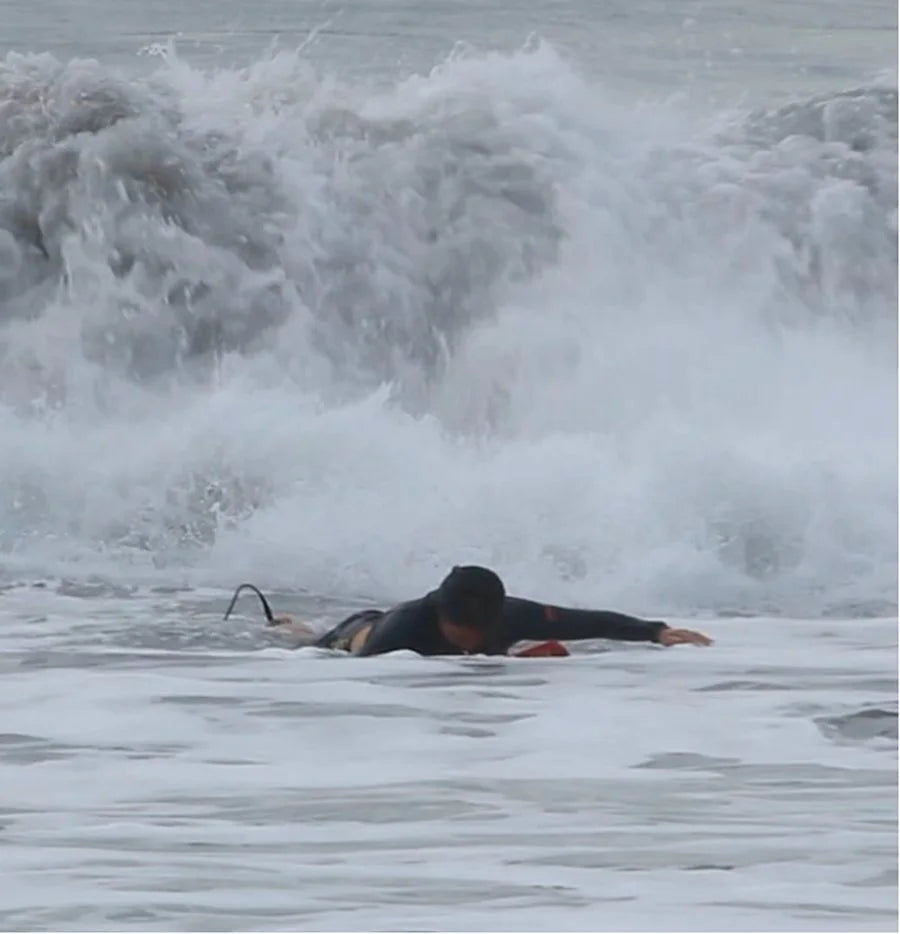
Have you ever had a session like this?
You paddle out feeling good. The first 30 minutes are great. Somewhere around an hour your shoulders start to go, and from then on you're a passenger. You stop paddling for anything that isn't right in front of you. You get caught inside because you couldn't get out in time. You end up sitting wide of the peak taking scraps, and you know the guys on the inside have noticed you're not paddling for the good ones.
Then you go in early, feeling demoralized. And it’s still pumping.
I'd fly somewhere warm, having saved for a year, and the same curve played out over days instead of minutes. Good on day one. Cooked by day three. Shoulders finally coming good the day before I flew home.
Then I turned 40 and stopped recovering the way I used to. The worst part wasn't the missed waves. It was paddling back out past people who'd just watched me get worked, and feeling like I didn't belong out there.
Surfing is supposed to be the thing that makes you feel alive. It was making me feel small.
I thought about quitting.
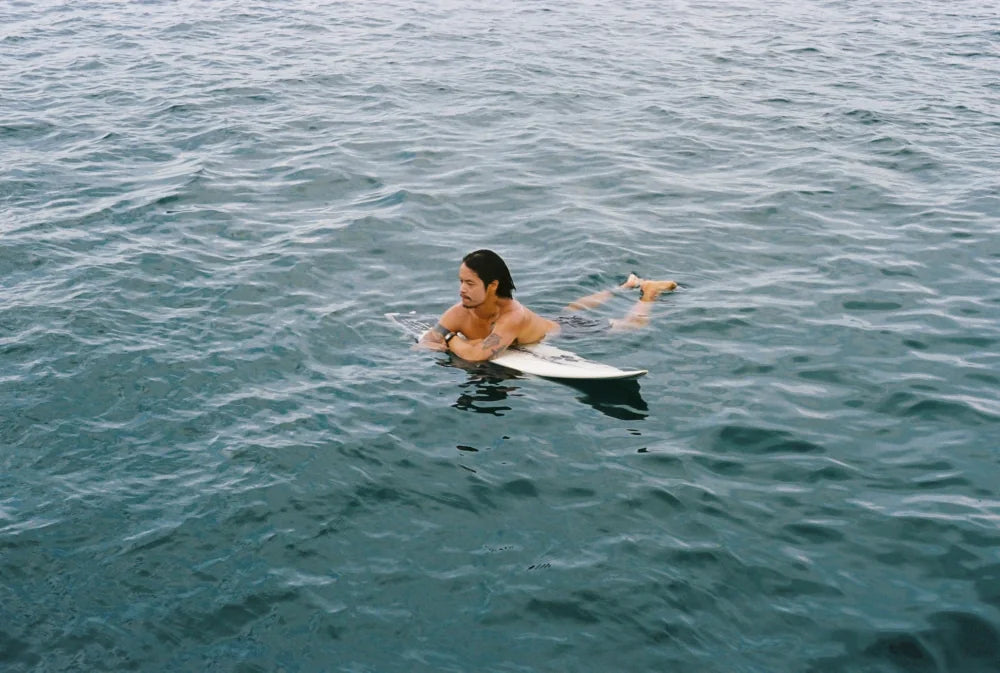
It isn't your fitness. It's the gap.
Here's what nobody told me in ten years of trying to fix this.
Paddle fitness is built by one thing: paddling. And it decays fast. The guy who surfs four times a week isn't fitter than you or younger than you. He just never lets the gap open. He stacks gains every session. You surf twice a month, so the gap between your surfs is longer than the fitness lasts, and you start from zero every time.
There's a second piece, and it's the one that took me longest to see. A paddle stroke has two halves. The pull, where your hand moves you forward. And the recovery, where your arm comes out of the water and swings back to the front. Prone on a board, with your back arched and no body roll to help, the recovery is what actually cooks your shoulders.
Everything you’ve ever been told to do, bands, pull-ups, laps, trains the pull. Nothing trains the recovery. So that’s why nothing worked.
Not because you didn't try hard enough. You were training half the stroke, at a frequency that can't hold onto it, and nobody told you.
And it doesn't stay in the water. It's why you sit wide and let the set waves go to someone else. It's why a trip you saved a year for is half wasted. It's why you start skipping the marginal days, then the good ones. And it's why, somewhere in your 40s, you start telling yourself the story that you're just getting older.
It doesn’t fix itself. Every year you wait, the gap gets harder to close.
Closing that gap is what the Basis Paddle Trainer was built to do.
I tried everything that was supposed to work
Runners have treadmills. Rowers have ergs. Why didn't surfers have anything for paddling? I went through every option I could find, and every one of them had the same blind spot.
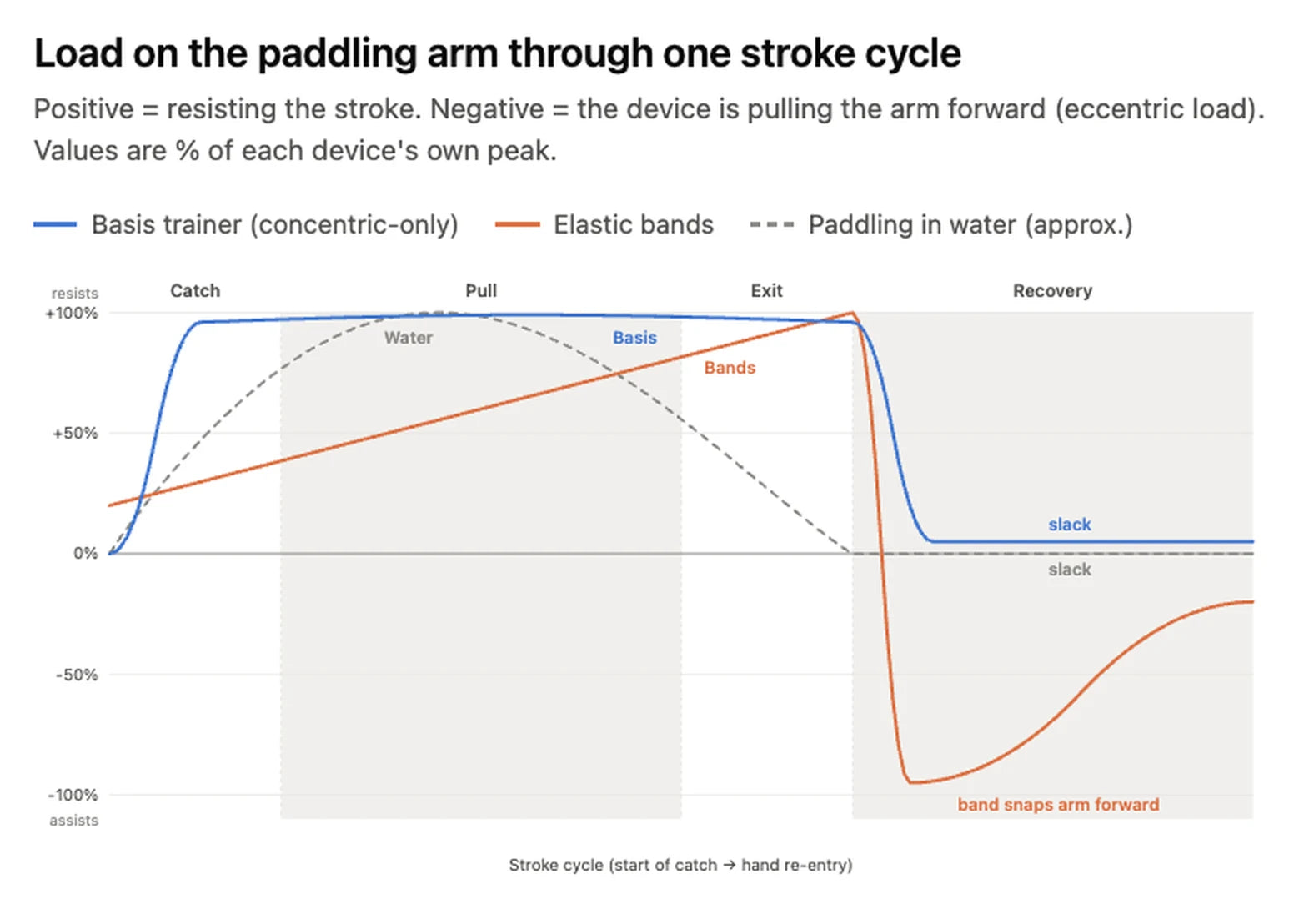
Resistance bands. I tried these extensively. There's almost no resistance through the catch and pull, which is where the power is, and most of the tension lands at the exit, so it turns into a tricep exercise. Then the band snaps your arm forward on the way back, so you can't train the recovery at all.
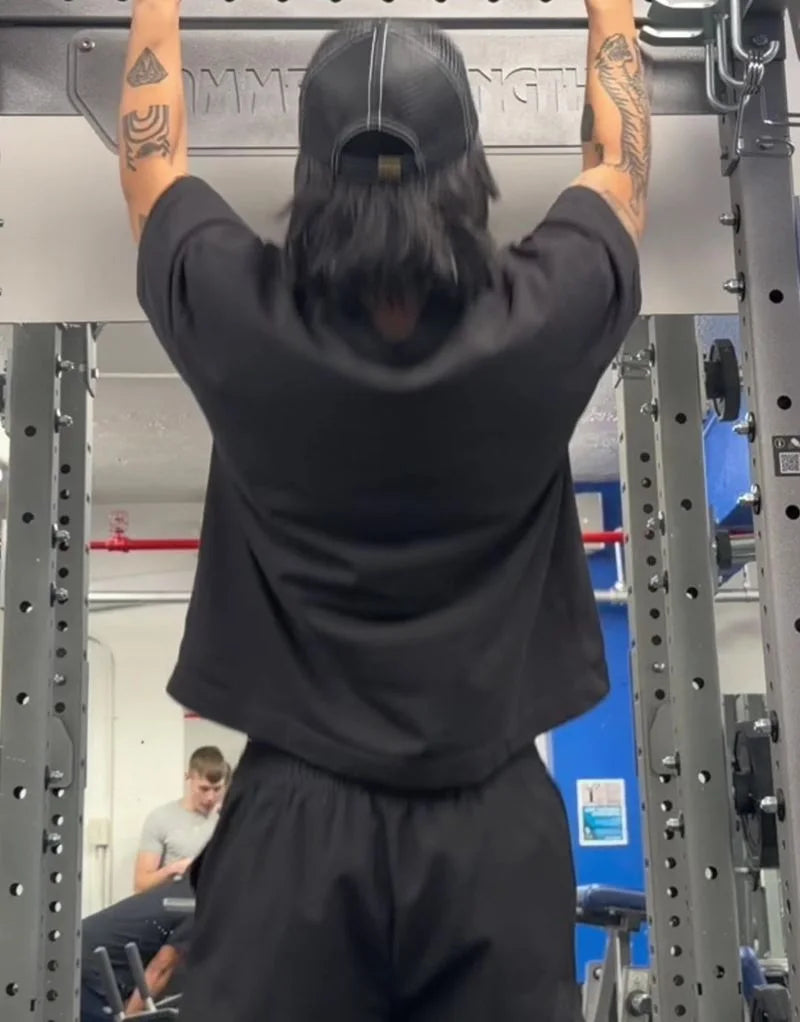
The gym. Pull-ups are good for strength. They don't give you endurance, and they don't make you strong in ways that carry over to two hours prone with your back arched. It's all pull. The recovery never gets touched.
Swimming. It's time intensive, and in the pool your body roll lifts the arm for you, so the recovery you need on a board never gets trained.
“Just surf more.” I live an hour from a flat beach and I have a job. That isn't an excuse. It's the constraint. You can't close the gap with the one thing your life won't let you do more of.
So I built what I wish I'd had at 28
In 2021 I thought I'd found a solution. I was wrong. A lot. Design one failed. Design two failed. Design three failed. I spent countless nights bracing for the next thing to break, working seven-day weeks around a day job.
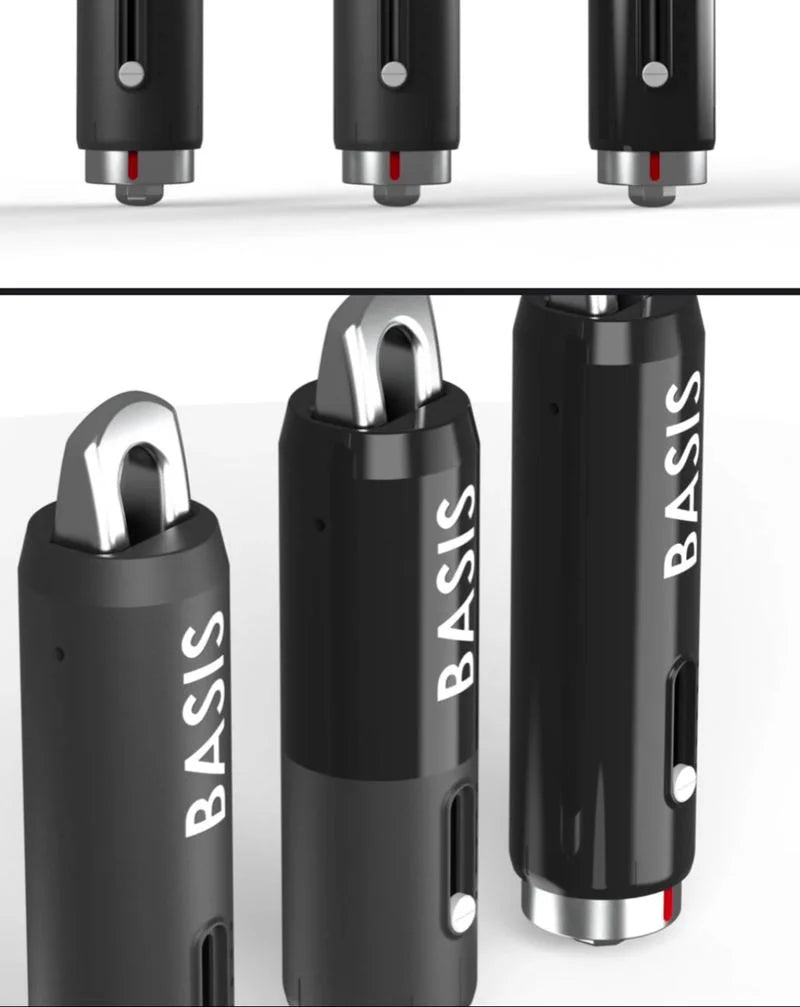
Three years later it worked. It’s a compact resistance unit that mounts to a door, a pole, a tree or a fence, with ergonomic paddles on the ends.
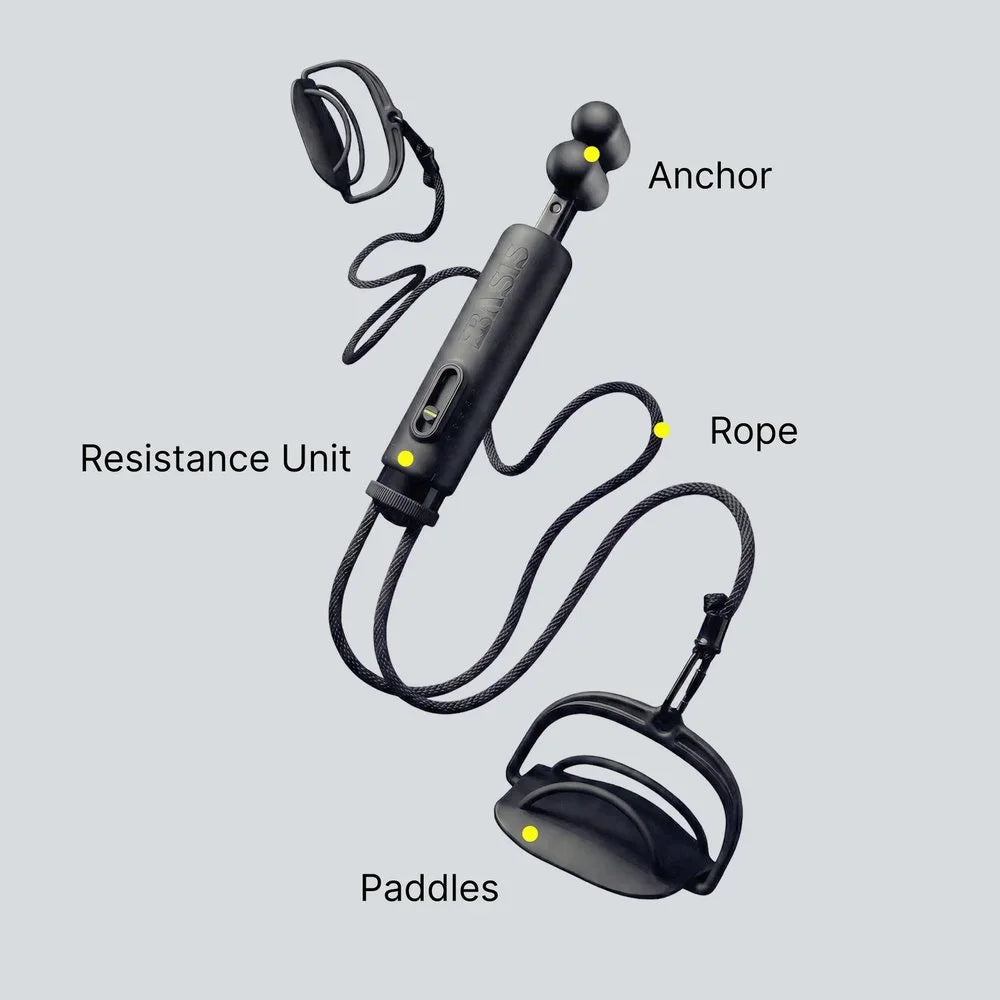
The resistance is consistent and even through the catch, pull and exit, so it feels like moving water. There’s zero resistance on the way back so you can train the recovery stroke unlike with bands. It adjusts up to 200 lbs and it takes ten to twenty minutes, a few times a week.
It’s called the Basis Paddle Trainer.
Could I not surf for months, then surf three and four hour sessions day after day?

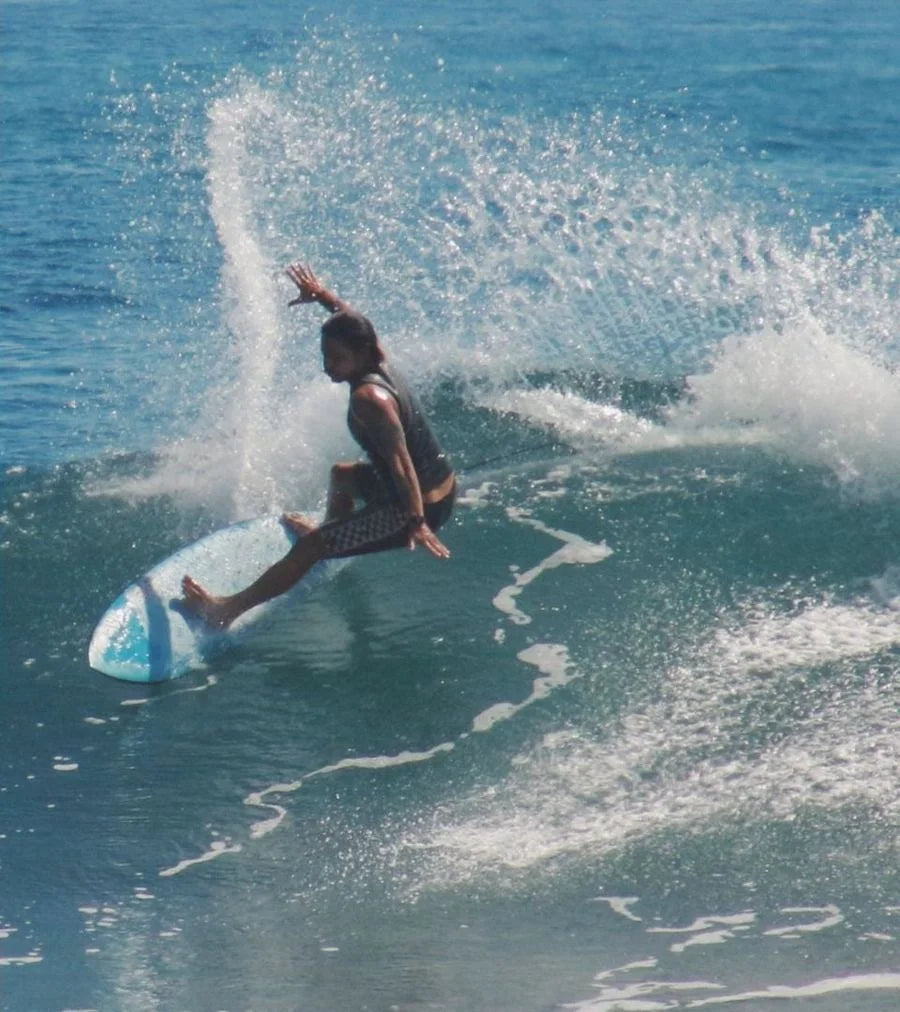
Yes. I'm in the best paddle shape of my life in my 40s, and my surfing has progressed more in the last few years than in the ten before it, for one boring reason: the sheer number of waves I'm catching now.
The part I didn't expect is that I finally feel like I belong out there. I sit at the peak instead of wide of it. I paddle for the set waves instead of watching them go to someone else.
I was tempted to keep it to myself. More waves for me. But it isn't just me any more, and the reviews that land in my inbox are more useful than anything I could tell you.
Adrian looked at it for months before he bought one.
I was skeptical of the trainer. I looked at it for a long time without buying. The trainer is awesome. Got me through so rough reentries into cold water on the Oregon coast. My endurance and power were greatly improved.
Adrian C., verified buyer, August 2026
The one I keep coming back to is Adam's, because he wrote down what he actually did rather than how he felt about it. Four weeks on the trainer, five days a week, ten to twenty minutes a day, split between endurance and sprints. Then five sessions in a wave pool in Scotland, all of them on the top resistance setting.
I caught 117 waves over 5 sessions and happy to report that I didn't feel tired until towards the end of my last session.
Adam S., verified buyer, July 2025
Jon had the cleanest comparison of anyone, because he'd surfed the same trip several times before and knew what his own week out there looked like. He bought the trainer about six weeks before going back, older and heavier than he'd been on any of the previous trips.
I'm older and heavier than ever before but DAMN I was able to go 6-8 hours of surfing a day and I did in-fact 4x my wave count.
Jon D., verified buyer, May 2026
There are a few hundred more of these on the product page.
The trainer is half of it. Your technique is the other half that could also be leaking waves.
Good fitness with bad technique still wastes energy and waves. Most surfers think they know how to paddle, and their strokes are full of leaks they can't feel. Fix the technique and the results are transformative. I know this from having helped thousands of surfers.
So the trainer doesn't ship on its own. It comes with paddling video analysis, weekly coaching calls where I review footage live, a training program so you peak for your swell or your trip instead of after it, a technique course, and a shoulder course, because sore shoulders don't surf. It all comes with the trainer, for free.
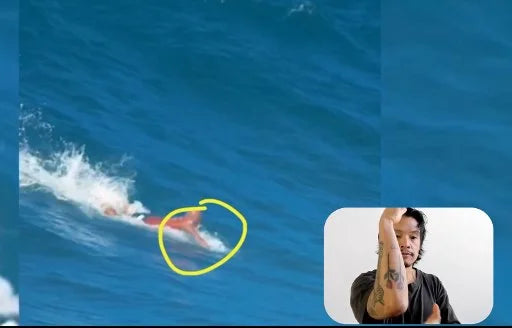
The paddle trainer itself is great. The real value is the entire system that includes shoulder exercises, stretching and lengthening, video analysis.
Mark D., verified buyer, March 2026
How many more sessions?
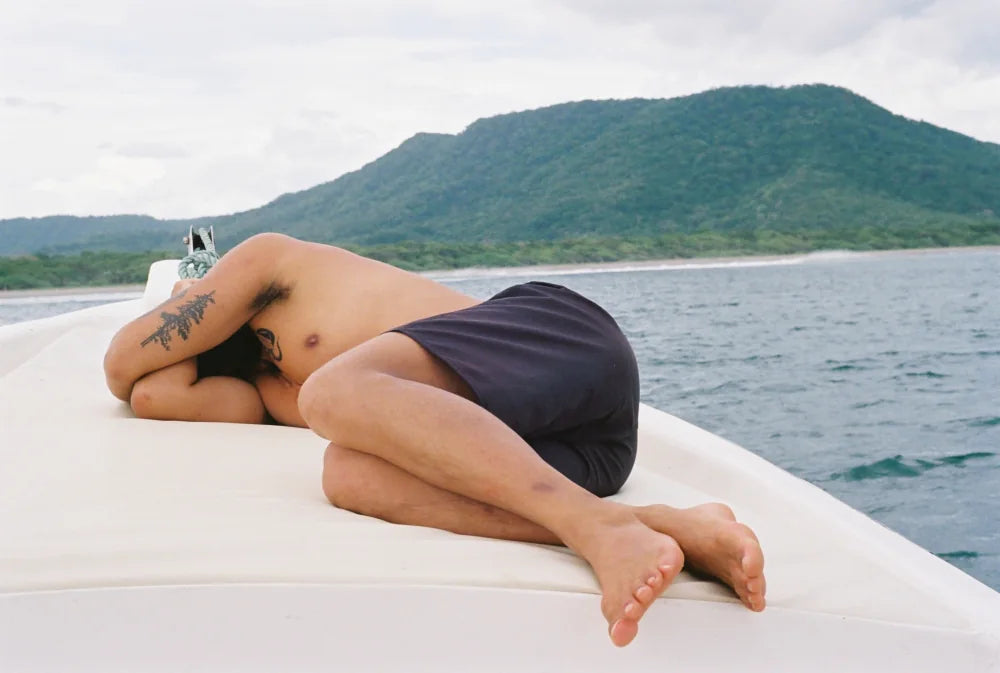
How many more times are you going to paddle out feeling good, be a passenger by the one-hour mark, and go in while it’s still pumping? How many more trips where you’re cooked by day three? How many more sets do you watch go to someone else because you’re sitting wide?
And be honest about the other options, because they’re what’s kept you here. Bands train the wrong half of the stroke and teach your shoulders bad habits. The gym makes you strong in ways that don’t carry over. Swimming needs a pool, a membership and hours you don’t have. “Just surf more” is the one thing your life won’t allow.
Every one of them keeps you exactly where you are, telling yourself you’re being patient.
The only solution is training the whole stroke, at home, so that you’re building instead of losing fitness.
That is the whole job of the Basis Paddle Trainer, and you have 45 days to find out whether it works for you.
What people ask me before they try it
“Is it really better than bands?”
Bands are weakest at the catch, heaviest at the exit, and they snap your arm forward so the recovery never gets trained. The trainer loads the whole pull, then gives you nothing on the return. It's the only compact trainer I know of that trains the recovery stroke.
I tried paddle training with resistance bands and it was a waste of time in comparison.
Ryan A., verified buyer, May 2025
“I've surfed for 30 years. I know how to paddle.”
Most surfers I've analyzed have energy leaks they can't feel. We've had people who have surfed their entire lives, even competitive swimmers, have breakthrough moments with their technique through the coaching. Send me your footage and I'll show you yours.
I work as a Surf Coach at Urbn Surf Sydney. I teach the students to use the Basis Trainer. I can tell from the way students paddle whether they have been in my class and have used the Basis Trainer or not.
Craig L., verified buyer and surf coach, March 2026
“I'll just swim.”
Swimming is time intensive, and in a pool your body roll lifts the arm for you, so the recovery you need prone on a board never gets trained. Ten minutes at home, a few times a week, is a different kind of ask.
As a swimmer, I’d say it’s definitely better than swimming for surf paddle improvement.
Sheldon Y., verified buyer
“It isn't cheap.”
Next to a set of bands, no, it isn't. Next to what you already spend to catch waves it's a rounding error. The trip you save a year for. The wetsuits. The boards in your garage you can't ride any more because you aren't paddle fit. The surf skate. None of it helps you catch more waves. A new board doesn't paddle for you and a trip doesn't fix the shoulders you bring to it. It's all output. This is the only thing on that list that fixes the input.
And the most expensive thing isn't on that list. It's your time. You get to surf a couple of times a month. You get one trip a year. Either you make them count or you spend the second half of every session as a passenger.
The current price and everything that ships with it are on the product page.
What really sets it apart? The paddling technique training, the ongoing support, and the community. Sure, it's not cheap, but if you live far from the ocean, it's an incredible investment.
Silvia C., verified buyer, June 2025
“Is it going to break?”
It's built to last years and it comes with a three-year warranty.
The Basis trainer is a solid, well made device, and combined with the technique videos has helped me make huge progress with my surfing.
Ryan A., verified buyer, May 2025
I thought it was another snake oil product, but inside I received a high-quality unit.
Joe J., verified buyer
“Will it wreck my door? I don't have a door.”
The anchor is soft, non-marking rubber and installs in seconds. No door, tie it to a pole, tree, fence or rack. No bench needed.
The best I have used or seen on the market. I have used many swim trainers. Getting prepared for Ironman competitions. This is easy to use and easy to setup.
Anthony B., verified buyer, May 2025
The gap doesn't close on its own
The problem isn't getting older, or flat forecasts, or your schedule. It's the gap between your surfs, and starting from zero every time.
So you have two options. Close this page and keep doing what you've been doing. Bands. Pull-ups. Hoping the next trip is different. You already know how that session ends, because you've had it a hundred times.
Or do what Jon, Bryan, Brendan and thousands of other surfers did, and try the trainer for 45 days. If it doesn't put more waves under you, send it back and I'll refund you. Free shipping both ways, no questions.
The fact you've read this far means part of you already knows which one it's going to be.
Van VuFounder, Basis Surf